The occupational health risk issues associated with the use and production of manufactured nanoparticles have not been clearly identified. Workers may inhale and be exposed to nanoparticles at levels significantly above ambient levels. Leading experts advocate testing the surface area of nanoparticles rather than their mass because the surface area of a nanoparticle is greater than that of a larger particle of the same mass. This increases the chance of reaction with the body. As a result, there is a growing need to study health effects and assess workplace conditions and individual exposures to nanoparticles based on particle surface area testing.
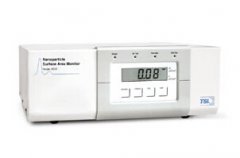
The patented Nanoparticle Surface Area Monitor 3550 (NSAM)* detects the surface area of particles deposited in the human lung relative to the tracheobronchial (TB) and alveolar (A) regions of the lungs (reported as μm2/cm3). model 3550 provides a simple and rapid solution for the detection of the surface area equivalent dose (SAD) in the lungs. 3550 is useful for scientific research in the fields of inhalation toxicology, health effects and epidemiology, and for the detection and assessment of the impact of nanoparticles. scientific research in the fields of inhalation toxicology, health effects and epidemiology, as well as for the detection and monitoring of workplace exposures.
Applications:
Basic aerosol research
Inhalation toxicology
Industrial hygiene studies
Health effects studies
Epidemiologic Studies
Occupational exposure monitoring
*U.S. Patents 6544484 and 7812306.
Features and Benefits
Selectable tracheobronchial (TB) or alveolar (A) deposition response detection mode
Comprehensive software for collecting, storing and displaying averages of continuous observations, time-weighted averages (8 hours) or total deposited surface area
Easy to operate, quick to configure and capable of continuous operation for unattended, long-term exposure monitoring
Sensitivity down to 10 nm
Exposure dose concentration range of 0 to 10,000 μm2/cm3 after five decades of coalescence
Data rate of one detection per second for short-term, high intensity exposures
Technical Specifications
Application range




 Home
Home Product
 News
News phone
phone